Voila! New look for Tech

Showing posts with label Science. Show all posts

The strange “glow” spotted on the Red Planet by Curiosity is not a sign of life. It is either a shiny rock or a glitch in the rover’s camera, NASA has said.UFO blogger Scott Waring had claimed that the new photograph taken by the rover suggests there are intelligent creatures living underground.
However, NASA said it has now investigated the image, and found it is simply a trick of light.

“One possibility is that the light is the glint from a rock surface reflecting the sun,” a NASA spokesperson was quoted as saying by mailonline.uk.
“When these images were taken each day, the sun was in the same direction as the bright spot, west-northwest from the rover, and relatively low in the sky.
“The rover science team is also looking at the possibility that the bright spots could be caused by cosmic rays striking the camera’s detector.”
NASA’s engineers believe the glow may have been caused by sunlight reaching the camera’s sensors through a vent hole in the camera housing.
The agency said this has happened previously on other cameras on Curiosity and other Mars rovers when the geometry of the incoming sunlight relative to the camera is precisely aligned.

NASA also revealed that such glitches are commonplace.
“Among the thousands of images received from Curiosity, ones with bright spots show up nearly every week.”
Curiosity takes images using two cameras, one in its right eye and the other in its left.
While the image from the right eye shows this bright spot, the same image from the left eye does not.
A new microscope can be printed on a flat piece of paper and assembled with a few extra components in less than 10 minutes. All the parts to make it cost less than a dollar, according to Stanford bioengineer Manu Prakash and colleagues, who describe their origami optics this week in a paper published on arxiv.org.


The goal, as Prakash explains in a TED talk posted today, is to provide a cheap medical screening tool that could be widely used in the developing world. Because the microscopes can be printed by the thousands, they could also be used for education and field research.

 An outline of the parts that make up the body of the microscope can be printed on card stock and then punched out. The additional parts include a lens, an LED for illumination and a button battery like the ones used to power a digital watch.

The principles of origami allow all the optical parts to line up properly when the scope is folded together (see more about how they’re made in the video below). Samples can be mounted to a sticky piece of tape, which takes the place of a glass microscope slide. Depending on the lens, the scope can provide up to 2,000X magnification, enough to see the parasites that cause malaria and other diseases. An individual scope can be made in different configurations for different purposes. Using certain colored LEDs for example, turns it into a fluorescent microscope capable of visualizing specific proteins or other biomolecules labeled with fluorescent dyes.
Two disease-causing microbes, Giardia lamblia (left)
and Leishmania donovani (right), as seen through
the folding microscope. Image: Cybulski et al., arxiv.org

The microscopes can run for up to 50 hours on a single battery. They’re tough too. They can withstand being dropped or even stepped on. Eventually, of course, people are going to find ways to break their clever microscopes. But at a dollar apiece for the most expensive, high magnification version, it’s not the end of the world. Print out another sheet, fold it up, and you’re back in business.

Youtube video Link>>


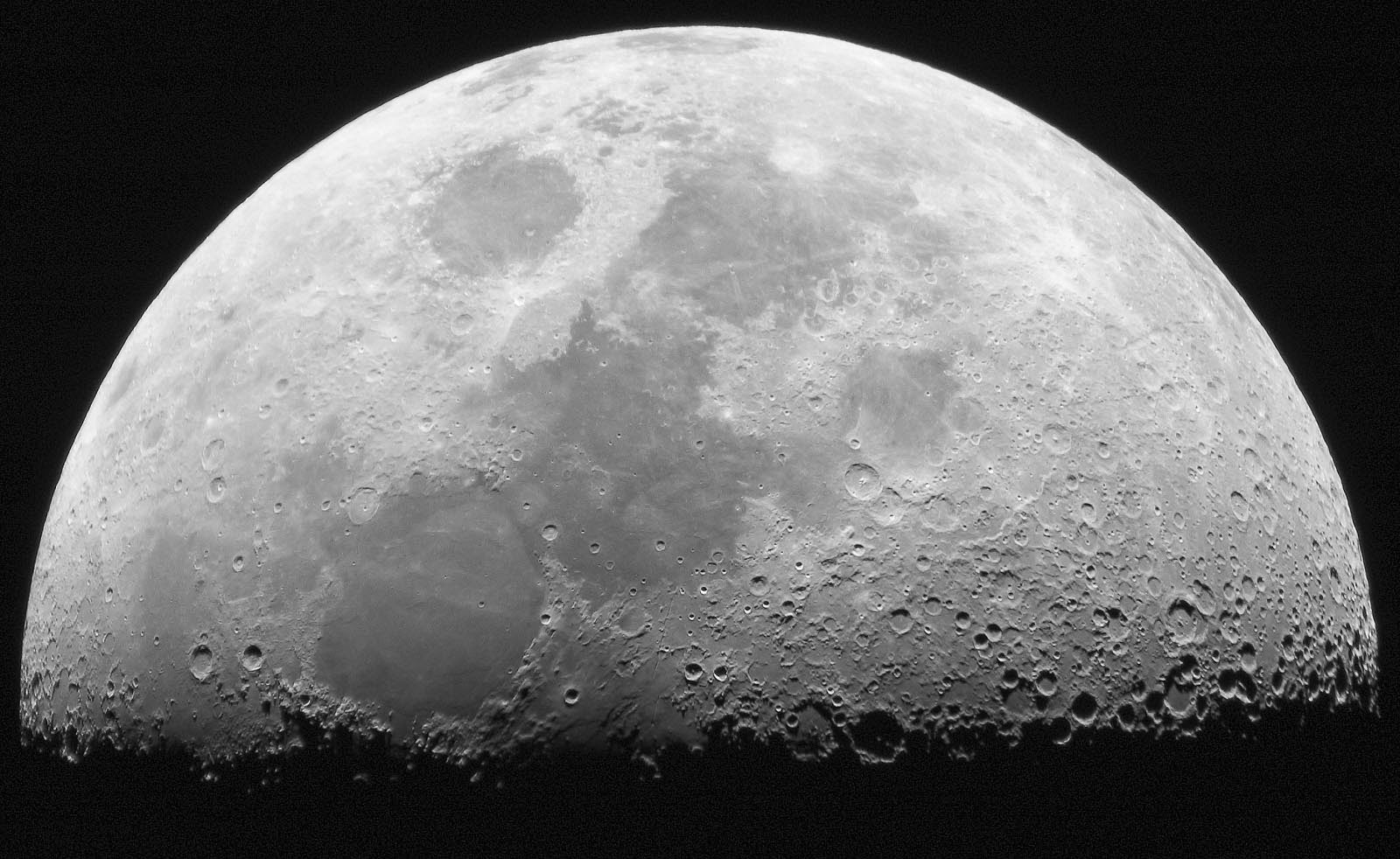
The traces of water in ancient moon rocks may share a common source with water on Earth, scientists say.

If confirmed, the potential moon-Earth water link would add more support to the theory that the moon's material came from the proto-Earth, and that water in this material survived the aftermath of the giant impact thought to have formed Earth's large natural satellite, researchers explained earlier this month at the Lunar and Planetary Science Conference in Houston.

Until now, most studies of moon rocks have focused on assessing the water contents of the younger basalts and volcanic glasses, which are partially melted substances of the lunar mantle. Researchers have access to the lunar rocks thanks to NASA's six Apollo moon landing missions and the three Russian robotic sample-return missions. The Apollo missions returned to Earth with a huge load of 842 pounds of lunar rock and soil samples. [Photos: The Search for Moon Water]

Water on the moon
The recent research instead concentrated on the possible sources of water in rocks from the lunar highlands. These samples make up some of the oldest moon rocks available for study and are thought to have directly formed from the moon magma ocean. Jessica Barnes, a PhD student in planetary and space sciences at the Open University in the United Kingdom, led the research.

.By studying the isotopic composition of water present in these rocks, we can examine the history of water in the Earth-moon system closer to the time when these two planetary bodies formed

The rocks are of volcanic origin and contain apatite, a calcium phosphate mineral that has the same volatile elements as those found in many igneous rocks on Earth. Volatile elements, which include hydrogen, chlorine and sulfur, are the elements that most easily escape from magma. 
The presence of these volatile elements in magmatic rocks tells scientists about the composition of the crust, mantle and atmosphere of a planet or moon. And because apatite is hydrogen rich, it suggests that water was present on the moon in the past.

Researchers have found apatite in various types of lunar rocks.And while previous studies have analyzed this mineral in younger lunar rocks and pyroclastic glasses, these samples did not provide ideal material for understanding the original volatile composition of the moon soon after its formation, said Barnes' co-author Mahesh Anand, also of the Open University. "Because of their relatively younger age, [the rocks] could have been derived from portions of the lunar interior that had received additional water after the moon's formation," he said.

Common water origin
The apatite-containing lunar rocks from the moon's highlands provide much better research material, Anand said. These are some of the oldest and most pristine materials available for laboratory investigations, he added.

Barnes and colleagues analyzed apatite material from three highlands samples, collected by the Apollo 17 astronauts, for water content and hydrogen isotopic composition. Apatites are extremely rare in these lunar samples, and therefore they were not fully investigated previously, said Anand.

However, they "have the potential to reveal the original history of water in the Earth-moon system because of their ancient age and close association with the lunar magma ocean crystallization products," he said.

"By studying the isotopic composition of water present in these rocks, we can examine the history of water in the Earth-moon system closer to the time when these two planetary bodies formed."

The scientists found substantial amounts of water locked into the apatite's crystal structure. They also determined the hydrogen isotopic signature of the water in these samples to pinpoint a potential source for the water.

To measure the isotopic composition of water and hydrogen in the rocks, the team used an instrument called a nano secondary ion mass spectrometer. "We essentially drill tiny — less than a tenth of a millimeter — holes in our samples with an ion beam," said Barnes.

The drilling process releases so-called secondary ions that detectors then collect. By measuring the amounts of these ions, the researchers determined the hydrogen isotopic composition of the water found in the apatite.

"Different objects in our solar system have characteristic H-isotopic signatures. We can use the H-isotopic signature of the water in the lunar samples as a fingerprint that we then match to known values of other solar system objects," said Barnes. Researchers can then use these signatures to determine where the water in the lunar samples actually came from, she said.

Having analyzed the signatures, the researchers noticed that the hydrogen isotopic signature measured for these lunar samples was comparable to that of some chondrite meteorites found on Earth. This means that such meteorites could have delivered water to the moon, said Barnes. And, she added, "the signature is also strikingly similar to that estimated for the Earth’s mantle, indicating that the water in the interiors of the Earth and the moon may share a common heritage."

More moon water constraints
The Earth-moon water link could be explained in two ways.

First, primordial terrestrial water could have survived the aftermath of the giant impact thought to have happened about 4.5 billion years ago — the prevailing explanation for the origin of the moon. Second, a common source could have added water to the Earth-moon system immediately after the moon's accretion, Anand said.

However, scientists should interpret such data with more caution before jumping to conclusions, said Larry Taylor, director of the Planetary Geosciences Institute at the University of Tennessee.

"Mahesh had his students ... present fine studies of apatites and their water," he said. "But the interpretations of these values need considerable further constraints. They are doing fine studies with their present knowledge of the subject. However, it is now apparent that further scientific data and constraints are needed and will now be addressed."

The research appears in the latest edition of the journal Earth and Planetary Science Letters.
Article Courtesy 
                                                       Space.com

Scientists, including an Indian-origin researcher, have identified a set of genes that could be key to the development of the next generation of tough and disease-resistant 'super rice'. 

"As the Earth's human population marches towards 9 billion, the need for hardy new varieties of grain crops has never been greater," researchers said. 

It won't be enough to yield record harvests under perfect conditions. In an era of climate change, pollution and the global spread of pathogens, these new grains must also be able to handle stress, they said. 

Researchers at the Michigan Technological University identified a set of genes that could be key to the development of the next generation of super rice. 

Analysis by biologist Ramakrishna Wusirika and PhD student Rafi Shaik uncovered more than 1,000 genes in rice that appear to play key roles in managing its response to two different kinds of stress: biotic, caused by infectious organisms like bacteria and abiotic, caused by environmental agents, like nutrient deficiency, flood and salinity. 

Traditionally, scientists have believed that different sets of genes regulated plants' responses to biotic and abiotic stress. 

However, Wusirika and Shaik discovered that 1,377 of the approximately 3,800 genes involved in rice's stress response played a role in both types stress. 

"These are the genes we think are involved in the cross talk between biotic and abiotic stresses," said Wusirika. 

About 70 per cent of those "master" genes are co-expressive - they turn on under both kinds of stress. 

Typically, the others turn on for biotic stress and turn off for abiotic stress. 

Scientists looked at the genes' response to five abiotic stresses - drought, heavy metal contamination, salt, cold and nutrient deprivation - and five biotic stresses - bacteria, fungus, insect predation, weed competition and nematodes. 

A total of 196 genes showed a wide range of expressions to these stresses. 

"The top genes are likely candidates for developing a rice variety with broad stress-range tolerance," Wusirika said. 

The study was published in the journal Plant Physiology.
Right from the days of film "Mr India", the enthusiasm to explore the possibility of invenitn an invisibility cloak that would bend light around an object and makes it invisible to the naked eye is gaining momentum.

Debashis Chanda and his team at the University of Central Florida have managed to create an artificial nanostructure that can do the job, called metamaterials, with which they are able to develop a larger swath of multilayer 3D metamaterial.

Researchers have reportedly stated that control of electromagnetic resonances over the 3-D space by structural manipulation allows precise control over propagation of light and larger pieces of this special material can be created.

Researchers are hoping to develop large-area metamaterial absorbers, which would enable fighter jets to remain invisible from detection systems.

Where did the zebra get his stripes? Or rather, why?
This has been studied over the years, with various theories proposed: to confuse predators, provide camouflage, regulate body temperature, aid in social interaction and to repel insects, according to National Geographic. The two that have had the best results in studies over the years are repelling insects and confusing predators.
A scientific team headed by Tim Caro, a wildlife biologist at the University of California-Davis, mapped the range of zebras as well as horses and asses, noting striping on their bodies. This was compared to the five hypotheses about the purpose of zebra stripes using variables such as predator ranges, wooded areas, temperatures and distribution of biting flies. The best overlap was with biting flies.
“I was amazed by our results,” said Tim Caro in the UC-Davis announcement. “Again and again, there was greater striping on areas of the body in those parts of the world where there was more annoyance from biting flies.”
The findings were just published in the journal Nature Communications, and the study supports a previous one done by European researchers in 2012. Scientists used boards to simulate zebra stripes and found that flies tended to stay away from them.
And now, this solution breeds another question: Why don’t biting flies like stripes?

1. There’s an actual scientific reason you shouldn’t pee in the pool.

There's an actual scientific reason you shouldn't pee in the pool.
pojoslaw
Chemicals in urine interact with those in chlorinated water to make two toxic chemicals: trichloramine and cyanogen chloride. But they’re made in such a tiny amount they’ve very very unlikely to do any damage.

2. It’s surprisingly easy to convince people their hands are made of rocks.

It's surprisingly easy to convince people their hands are made of rocks.
superpohn
The researchers explain: “We repeatedly gently hit participants’ hand with a small hammer, while progressively replacing the natural sound of the hammer against the skin with the sound of a hammer hitting a piece of marble.”
After the experiment participants rated their hands as stiffer, heavier and less sensitive.

3. It’s possible to revive a 30,000 year-old giant virushidden in Siberian permafrost.

It's possible to revive a 30,000 year-old giant virus hidden in Siberian permafrost.
Image courtesy of Julia Bartoli and Chantal Abergel, IGS and CNRS-AMU.
OK, so “giant” is relative – the virus measure’s just 1.5 microns in length and 0.5 microns in diameter. It’s still active, but doesn’t appear to be able to infect humans or animals.

4. Sixty-six million years ago there was a dinosaur that was basically a “chicken from hell”.

Sixty-six million years ago there was a dinosaur that was basically a "chicken from hell" .
Mark A. Klingler, Carnegie Museum of Natural History
It had a body over 10ft long and huge, sharp claws. A typical human stood next to it would come up just above its hip.

5. There are waves of methane on Saturn.

There are waves of methane on Saturn.
NASA/JPL/Space Science Institute
Titan is Saturn’s largest moon and has a whole weather system based on hydrocarbons like methane, including lakes and oceans. The downside is the waves are only about 2cm high.

6. There’s been a dwarf planet hiding in the outer solar system.

There's been a dwarf planet hiding in the outer solar system.
Scott S. Sheppard: Carnegie Institution for Science
It orbits further out than Pluto and even fellow dwarf planet Sedna and is about 450 kilometres in diameter.

7. In the early universe there almost certainly was a period of super fast expansion called inflation.

In the early universe there almost certainly was a period of super fast expansion called inflation.
severopr
Scientists have measured an echo of the big bang in the form of gravitational wavesfrom the very early universe, providing strong evidence that inflation happened.

8. You can create an accurate mugshot just using DNA.

You can create an accurate mugshot just using DNA.
Scientists created a statistical model to create an accurate 3D picture of a person’s face based on racial, gender and genetic markers. The technique could also be used to give us a better idea of what our ancestors looked like.

9. Some salamanders are shrinking and it might be the fault of climate change.

Some salamanders are shrinking and it might be the fault of climate change.
EJack
The researchers found that the size reduction of salamanders in the US Appalachian Mountains was greatest at lower latitudes, in regions experiencing increased temperature and decreased rainfall over the 55-year period of the study. It seems the salamanders adapted to the changing conditions by burning energy faster.

10. Mercury is also shrinking.

Mercury is also shrinking .
Ho New / Reuters
Over the past 4.5 billion years its diameter could have shrunk by 14km.

11. There’s a ring system around an asteroid in the solar system.

There's a ring system around an asteroid in the solar system.
Lucie Maquet
Asteroid Chariklo orbits the sun between gas giants Saturn and Uranus. Until now we’d only seen rings around planets, not any other solar system objects.

12. We might not be too far away from night visioncontact lenses.

We might not be too far away from night vision contact lenses.
Flickr: treehouse1977 / Creative Commons
Researchers have made a super thin infrared sensor from everyone’s favourite wonder material: graphene. The prototype sensor is smaller than a fingernail and could be made even smaller.

13. Spider-Man’s silk would have been strong enoughto stop a train.

Spider-Man’s silk would have been strong enough to stop a train.
DenBoma
Several companies are working on making synthetic spider silk to take advantage of its super strength. It’d be useful for making cables and bulletproof vests, but also for wound dressings thanks to its antimicrobial properties.