Voila! New look for Tech

Showing posts with label astrophysics. Show all posts


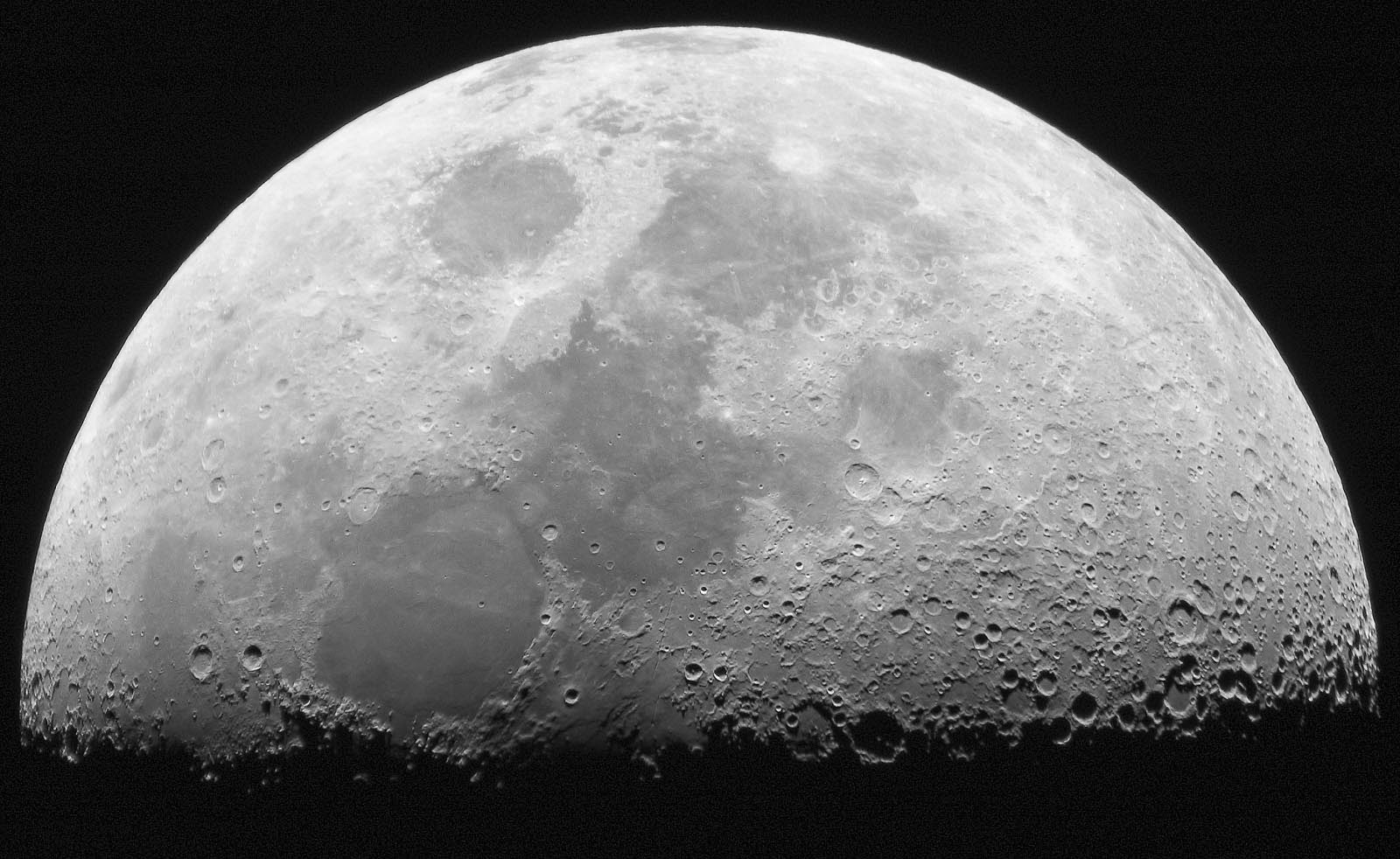
The traces of water in ancient moon rocks may share a common source with water on Earth, scientists say.

If confirmed, the potential moon-Earth water link would add more support to the theory that the moon's material came from the proto-Earth, and that water in this material survived the aftermath of the giant impact thought to have formed Earth's large natural satellite, researchers explained earlier this month at the Lunar and Planetary Science Conference in Houston.

Until now, most studies of moon rocks have focused on assessing the water contents of the younger basalts and volcanic glasses, which are partially melted substances of the lunar mantle. Researchers have access to the lunar rocks thanks to NASA's six Apollo moon landing missions and the three Russian robotic sample-return missions. The Apollo missions returned to Earth with a huge load of 842 pounds of lunar rock and soil samples. [Photos: The Search for Moon Water]

Water on the moon
The recent research instead concentrated on the possible sources of water in rocks from the lunar highlands. These samples make up some of the oldest moon rocks available for study and are thought to have directly formed from the moon magma ocean. Jessica Barnes, a PhD student in planetary and space sciences at the Open University in the United Kingdom, led the research.

.By studying the isotopic composition of water present in these rocks, we can examine the history of water in the Earth-moon system closer to the time when these two planetary bodies formed

The rocks are of volcanic origin and contain apatite, a calcium phosphate mineral that has the same volatile elements as those found in many igneous rocks on Earth. Volatile elements, which include hydrogen, chlorine and sulfur, are the elements that most easily escape from magma. 
The presence of these volatile elements in magmatic rocks tells scientists about the composition of the crust, mantle and atmosphere of a planet or moon. And because apatite is hydrogen rich, it suggests that water was present on the moon in the past.

Researchers have found apatite in various types of lunar rocks.And while previous studies have analyzed this mineral in younger lunar rocks and pyroclastic glasses, these samples did not provide ideal material for understanding the original volatile composition of the moon soon after its formation, said Barnes' co-author Mahesh Anand, also of the Open University. "Because of their relatively younger age, [the rocks] could have been derived from portions of the lunar interior that had received additional water after the moon's formation," he said.

Common water origin
The apatite-containing lunar rocks from the moon's highlands provide much better research material, Anand said. These are some of the oldest and most pristine materials available for laboratory investigations, he added.

Barnes and colleagues analyzed apatite material from three highlands samples, collected by the Apollo 17 astronauts, for water content and hydrogen isotopic composition. Apatites are extremely rare in these lunar samples, and therefore they were not fully investigated previously, said Anand.

However, they "have the potential to reveal the original history of water in the Earth-moon system because of their ancient age and close association with the lunar magma ocean crystallization products," he said.

"By studying the isotopic composition of water present in these rocks, we can examine the history of water in the Earth-moon system closer to the time when these two planetary bodies formed."

The scientists found substantial amounts of water locked into the apatite's crystal structure. They also determined the hydrogen isotopic signature of the water in these samples to pinpoint a potential source for the water.

To measure the isotopic composition of water and hydrogen in the rocks, the team used an instrument called a nano secondary ion mass spectrometer. "We essentially drill tiny — less than a tenth of a millimeter — holes in our samples with an ion beam," said Barnes.

The drilling process releases so-called secondary ions that detectors then collect. By measuring the amounts of these ions, the researchers determined the hydrogen isotopic composition of the water found in the apatite.

"Different objects in our solar system have characteristic H-isotopic signatures. We can use the H-isotopic signature of the water in the lunar samples as a fingerprint that we then match to known values of other solar system objects," said Barnes. Researchers can then use these signatures to determine where the water in the lunar samples actually came from, she said.

Having analyzed the signatures, the researchers noticed that the hydrogen isotopic signature measured for these lunar samples was comparable to that of some chondrite meteorites found on Earth. This means that such meteorites could have delivered water to the moon, said Barnes. And, she added, "the signature is also strikingly similar to that estimated for the Earth’s mantle, indicating that the water in the interiors of the Earth and the moon may share a common heritage."

More moon water constraints
The Earth-moon water link could be explained in two ways.

First, primordial terrestrial water could have survived the aftermath of the giant impact thought to have happened about 4.5 billion years ago — the prevailing explanation for the origin of the moon. Second, a common source could have added water to the Earth-moon system immediately after the moon's accretion, Anand said.

However, scientists should interpret such data with more caution before jumping to conclusions, said Larry Taylor, director of the Planetary Geosciences Institute at the University of Tennessee.

"Mahesh had his students ... present fine studies of apatites and their water," he said. "But the interpretations of these values need considerable further constraints. They are doing fine studies with their present knowledge of the subject. However, it is now apparent that further scientific data and constraints are needed and will now be addressed."

The research appears in the latest edition of the journal Earth and Planetary Science Letters.
Article Courtesy 
                                                       Space.com
Heart becomes more spherical when exposed to long periods of microgravity in space, a change that could lead to cardiac problems, a new research has found.
The findings from a study of 12 astronauts represent an important step toward understanding how a spaceflight of 18 months or more could affect astronauts' heart health, researchers said.
"The heart doesn't work as hard in space, which can cause a loss of muscle mass," said James Thomas, Moore Chair o f Cardiovascular Imaging an d Lead Scientist for Ultrasound at NASA, and senior author of the study.
"That can have serious consequences after the return to Earth, so we're looking into whether there are measures that can be taken to prevent or counteract that loss," Thomas said. The researchers said that knowing the amount and type of exercise astronauts need to perform to keep the heart healthy is going to be very important to guarantee their safety on a long flight like a mission to Mars.
Thomas added that exercise regimens developed for astronauts could also be used to help maintain heart health in people on Earth who have severe physical limitations, such as people on extended bed rest or those with heart failure. The research team trained astronauts to take images of
their hearts using ultrasound machines installed on the International Space Station. Twelve astronauts participated, providing data on heart shape before, during and after spaceflight.
The results show the heart in space becomes more spherical by a factor of 9.4 per cent, a transformation similar to what scientists had predicted with sophisticated
mathematical models developed for the project. By validating those models, the study could also lead to a better understanding of common cardiovascular conditions in
patients on Earth.
"The models predicted the changes we observed in the astronauts almost exactly. It gives us confidence that we can move ahead and start using these models for more clinically
important applications on Earth, such as to predict what happens to the heart under different stresses," Thomas said.
The team is now working to generalise the models to analyse such conditions as ischemic heart disease, hypertrophic cardiomyopathy and valvular heart disease.
China has restored communications with its space program’s troubled “Jade Rabbit” moon rover, but engineers are still working to fix its mechanical problems, state media said Thursday.

The official Xinhua News Agency cited Pei Zhaoyu, the lunar probe program’s spokesman, as saying the rover had survived the frigid cold of the lunar night that started Jan. 25.The “Jade Rabbit” rover was designed to roam the lunar surface for three months while surveying for natural resources and sending back data. But it ran into problems as it was shutting down in preparation for the lunar night, which lasts two weeks.

The problems were a rare setback for China’s burgeoning space program, which in recent years has conducted space walks and placed a space station in orbit.

Pei said the rover had “come back to life” despite space experts’ earlier concerns that it might not survive the extremely low temperatures of the lunar night, when the temperature drops to minus 180 degrees Celsius (minus 292 Fahrenheit).

“The rover stands a chance of being saved now that it is still alive,” Pei was quoted as saying. He said it was still unclear what caused the problem.

The mission has been a popular success for China’s military-backed space program. Updates on the moon rover’s progress have been posted on an unofficial Chinese microblog account written with the Jade Rabbit’s voice, attracting tens of thousands of comments by Chinese Internet users.

Copyright 2014 The Associated Press. All rights reserved. This material may not be published, broadcast, rewritten or redistributed.
New Delhi: India's first interplanetary mission completes 100 days of its voyage towards Mars on Wednesday. 

The Mars Orbiter Mission (MOM), also called Mangalyaan, was launched into Earth orbit on board indigenous PSLV-C25 rocket at 02:38pm (0908 GMT) on November 5, 2013 by the Indian Space Research Organisation (ISRO) from Satish Dhawan Space Centre at Sriharikota in Andhra Pradesh.
The orbiter which is on a 300-day journey will cover over 680 million km in an elliptical orbit and is expected to reach the Red planet on September 24, 2014. The spacecraft has travelled 190 million km so far. 
“The spacecraft health is normal. The spacecraft is continuously monitored by the ground station of ISRO Telemetry, Tracking and Command Network (ISTRAC), located at Byalalu, near Bangalore. Except for a 40 minute break in the Telemetry data received from the spacecraft to the ground station, data has been continuously available for all the 100 days,” ISRO said in a statement. 

The propulsion system of the spacecraft is configured for Trajectory Correction Manoeuvre (TCMs) and the Mars Orbit Insertion (MOI) Operation. On February 6, 2014, all the five payloads on Mars Orbiter spacecraft were switched 'ON' to check their health. 

“The health parameters of all the payloads are normal. Presently, the spacecraft is at a radio distance of 16 million km causing a one way communication delay of approximately 55 seconds. After travelling the remaining distance of about 490 million km over the next 210 days, the spacecraft would be inserted into the Martian Orbit on September 24, 2014,” the agency said. 

The 350-tonne launch vehicle which orbited Earth for nearly a month ventured out of the planet’s sphere of influence on December 01, 2013, following six orbit raising manoeuvres. 

The first TCM was conducted on December 11, 2013. Three more TCM operations are planned around April 2014, August 2014 and September 2014. 

“The trajectory of the spacecraft, till today, is as expected,” the agency added. 

The Rs 450 crore mission - if successful - will allow ISRO to join an elite group of space explorers to Mars along with United States’ NASA, Russia’s Roscosmos and the Europe's space agency. The success of the mission will also make India the first Asian nation to have achieved the feat. 

The objectives of the mission are to develop the technologies required for design, planning, management and operations of an interplanetary mission and also to study the Martian surface and atmosphere using indigenous scientific instruments. 
The ANU SkyMapper telescope at the Sliding Spring Observatory has discovered the oldest kn...
The ANU SkyMapper telescope at the Sliding Spring Observatory has discovered the oldest known star in the Universe (Photo: ANU)
A team of astronomers at The Australian National University (ANU) working on a five-year project to produce the first comprehensive digital survey of the southern sky has discovered the oldest known star in the Universe. Just a 6,000 light year astronomical hop, skip and jump from Earth, the ancient star formed shortly after the Big Bang 13.7 billion years ago.
Similar to the Sloan Digital Sky Survey (SDSS), which is mapping the Northern Hemisphere sky, the SkyMapper Southern Sky Survey is casting its telescopic eye on the southern sky. In the first year of the five-year project, the ANU SkyMapper telescope at the Sliding Spring Observatory about 500 km (310 miles) north west of Sydney has photographed some 60 million stars.
As well as creating a comprehensive census of the stars in the southern sky, SkyMapper is also tasked with mapping dark matter and uncovering the first quasars and stars to form after the birth of the Universe. The SkyMapper telescope is able to find such ancient stars through its ability to detect, through their color, stars with low iron.
"The stars we are finding number one in a million," said team member Professor Mike Bessell, who worked with Dr Stefan Keller of the ANU Research School of Astronomy and Astrophysics on the research.
Lead researcher Dr Stefan Keller (left) and team member Professor Mike Bessell (Photo: Dav...
The researchers say the discovery will provide a better idea of what the Universe was like in its infancy by allowing the study of the chemistry of the first stars. According to the team, the composition of the newly-discovered star shows it formed in the wake of a primordial star, which had a mass 60 times that of our Sun.
"To make a star like our Sun, you take the basic ingredients of hydrogen and helium from the Big Bang and add an enormous amount of iron – the equivalent of about 1,000 times the Earth’s mass,” said Dr Keller. "To make this ancient star, you need no more than an Australia-sized asteroid of iron and lots of carbon. It’s a very different recipe that tells us a lot about the nature of the first stars and how they died."
Although it was previously believed that the death of primordial stars involved extremely violent explosions that spread iron over huge volumes of space, the ancient star shows signs of lighter elements, such as carbon and magnesium, but no sign of iron.
"This indicates the primordial star’s supernova explosion was of surprisingly low energy," said Dr Keller. "Although sufficient to disintegrate the primordial star, almost all of the heavy elements such as iron, were consumed by a black hole that formed at the heart of the explosion."
The ancient star's discovery was confirmed using the Magellan telescope in Chile, and a paper detailing the discovery is published in the journal Nature. Data collected by the survey, which is funded by the Australia Research Council, will also be made freely available on the internet.
 This artist's concept illustrates a supermassive black hole with millions to billions times the mass of our sun. Supermassive black holes are enormously dense objects buried at the hearts of galaxies. Image by NASA/JPL-Caltech
This artist’s concept shows a supermassive black hole with millions to billions times the mass of our sun. Supermassive black holes are enormously dense objects buried at the hearts of galaxies, and fundamental aspects of their behavior have baffled scientists. Image by NASA/JPL-Caltech

Last week, famed physicist Stephen Hawking made headlines with this bold statement: “there are no black holes.”
Those words come directly from Hawking’s latest paper, but they are contained within a larger point involving the mechanics of a black hole and its famous “event horizon.” (That’s the area thought to exist around a black hole from which nothing, not even light, can escape.) To be clear, Hawking was not claiming that black holes don’t exist. Astronomers have been observing black holes for decades, said Joseph Polchinski, theoretical physicist at the Kavli Institute for Theoretical Physics at the University of California, Santa Barbara.
What Hawking did was propose an explanation to one of the most puzzling problems in theoretical physics. How can black holes exist when they seem to break two fundamental laws of physics — Einstein’s laws of relativity and quantum mechanics? We’ll explain.
First, a quick Physics 101 reminder. Einstein’s theory of general relativity first conceived a black hole as an object with a gravitational pull so powerful that anything — gas, dust, stars, planets, whole galaxies, even light — that crossed the event horizon would fall in and be forever trapped and ultimately crushed, never to escape.
But with the emergence of quantum mechanics in the mid-20th century, many believed that this information — the particles and matter sucked into the black hole — had to be conserved, somewhere. According to quantum mechanics, a black hole could shred a book into its subatomic particles, but as long as all the pieces still existed, it was possible to reconstruct that book, Polchinski explained.
Then Hawking published a paper on black holes in the 1970s, and everything changed. He proposed that in fact, black holes were losing mass and would eventually evaporate. If they evaporated, they would take all traces of what fell into them with it. The information would not, in fact, be conserved. It would vanish.
Suddenly, science didn’t make sense. The field of physics was faced with a giant dilemma.
This question of what ultimately happens to all the stuff drawn into the black hole has become known as “the information paradox.”
“This is a paradox that hasn’t been completely resolved,” said Juan Maldacena at the Institute for Advanced Study in Princeton, N.J. “There are various ideas for how it could be resolved, but I think no one has convinced the other members of the community that his idea is correct.” That includes, he said, Hawking’s latest proposal, which reimagines the event horizon.
In a nutshell, Hawking seems to be saying this: instead of an event horizon, there is something else he calls an “apparent horizon.” In this apparent horizon, matter and energy is temporarily suspended, but then released. If this is true, it changes black holes as we know them.
Theoretical physicist Stephen Hawking, who is famous for his work in studying black holes, announced last week "there are no black holes." But what did he mean by that? Photo by Karwai Tang.
Theoretical physicist Stephen Hawking, who is famous for his work in studying black holes, announced last week “there are no black holes.” But what did he mean by that? Photo by Karwai Tang.
“The absence of event horizons means that there are no black holes — in the sense of regimes from which light can’t escape to infinity,” Hawking wrote in his paper.
According to his proposal, black holes do trap information for a long time, but that information can, eventually, escape, Polchinski said. He added that Hawking’s proposal remains untested.
“The broader picture is right now that we really have this conflict between two theories, quantum mechanics and Einstein’s theory of gravity, both of which we have strong reason to believe are true. And yet when you combine them, they make this prediction of information loss that we believe is false,” Polchinski said.
Over the past 40 years, physicists have proposed multiple solutions, forcing the field to rethink black-hole behavior. In 1992, for example, Leonard Susskind, Larus Thorlacius and John Uglom proposed an idea known as “complementarity.”
Then there’s the complicated “firewall paradox.” In 2012, Polchinski and his colleagues found a problem with the event horizon. As particles enter the event horizon, they’re ripped apart. As these particles break down, their research showed, they release a burst of energy, creating a firewall around the center of the black hole. This has become known as “the firewall paradox.” This notion of the event horizon as a highly energetic region throws another wrench in Einstein’s theory, which said that nothing special should happen at the event horizon.
That’s where Hawking’s latest paper comes in, suggesting physicists need to rethink that event horizon. His latest proposal suggests that there is in fact no event horizon to burn up. Instead, the apparent horizon becomes the real boundary.
If you’re confused, you’re not alone, said Matt Strassler, blogger and visiting theoretical physicist at Harvard University. The entire theoretical physics community is still working on these problems, and this represents merely one proposal among dozens.
“There’s all sorts of cacophony in the field … The problem is no one can come up, so far, with something you can actually calculate. So it’s ideas and proposals and approximations and guesses,” he said.
Notably, Hawking’s work has not yet been peer-reviewed, and it contains no equations, so there’s no way to test his new ideas, Polchinski said. Because of that, he added, his statement about black holes can’t be considered a breakthrough in science — yet.
Hawking’s paper appeared online last week on an online server for research articles operated by Cornell University called arXiv.
How can any of these paradoxes around black holes be answered? For now, the mathematical formulas to test and solve these new hypotheses simply aren’t there, Strassler said, adding that these are conceptual problems, not just a math problems.
“These aren’t the kind of calculations you can just throw at a computer. Even to figure out what questions you need to ask isn’t obvious,” he said. “The calculations themselves involve very, very subtle effects that a computer would never be able to keep track of.”
The problems have everyone in the field confused, Polchinski said, but that confusion is thrilling for physicists. Solving a paradox is the way the field advances, he said.
“It’s not so much that there’s a mistake, but somehow, some assumption that we believe about quantum mechanics and gravity is wrong, and we’re trying to figure out what it is,” Polchinski said. “It’s confusion, but it’s confusion that we hope makes us ripe for advance.”